A closer look on life through the lens of Scripture

Why not skip genealogies, measurements and all the other parts that seem... boring? Yes, you might have come across the passage that tells us that every verse is intentionally written by inspiration from God 2 Timothy 3:16 But if we're honest with ourselves, we still struggle with reading these parts of the Bible. So what then? Something that might help is thinking about a personal relationship you care about. Like your spouse, a very close friend, or your child. Imagine that person is talking in great detail about their job, and you can't seem to grasp what they're talking about or muster interest even. You end up making an implicit decision. You could tell them you find it boring and ask them to skip over that part when they're talking to you. Which could very well be an excusable thing to do, for the record. But if you're intentional about building/strengthening that relationship, you'll make an effort to understand. You'll ask questions. Or, at the very least, you'll be a listening ear. Because if it's important to them, it's “important” to you.
September 11, 2026

I still remember finding out that not all fruit juices are made from fruit. Somewhere along the way, we worked out how to mimic the taste of mango juice without planting a seed or squeezing a single mango. The result tastes the same, minus all the stress of growing the thing. And it's only noticeable to someone who has tasted the real thing. That trick didn't stay in the drinks aisle. It's crept into almost every corner of life. Including our faith. We already know what the end product of a Christian life looks like. Galatians 5 lays it out Galatians 5:22-23 So we reverse-engineered it. We learned how to sound loving. How to look joyful. How to seem at peace. We picked up the language, showed up to the right rooms, carried all the familiar markers. We got good at playing church. The flavour without the fruit. And what's the harm? From the outside, nothing. It looks remarkably like the real thing. But Paul never told us to produce the fruit of the Spirit. He said it grows, when we walk by the Spirit. One is imitation. The other is transformation. There's a difference. You can fake patience for a while. You can learn the vocabulary of love. You can build a whole life that looks like Jesus from a distance. But pressure reveals what's actually growing underneath (see Matthew 7:24-27). And when following him finally costs you something, flavour has nothing to give. The goal was never to get better at looking like Jesus. It was to become like him. And that's the one thing you can't manufacture. It grows, or it doesn't. Flavour without the fruit leads nowhere. So why build a life around it?
August 2, 2026

Some of the hardest parts of following Jesus aren't always questions of right and wrong. Sometimes it's trying to figure out how to respond when someone believes something different than you do. How do I stay faithful to what I believe without becoming cold? How do I care for someone without feeling like I'm compromising? How do I speak truth without losing compassion? When we read through the Gospels, we notice a recurring theme: Jesus was constantly moved by compassion. A leper who was culturally ostracized from his community Mark 1:41 A rich young ruler who was wrestling with whether he was actually willing to follow Him. Mark 10:21 And His answer to someone trying to find the edge of who's worth loving? Jesus answers with a story where the hero is the person his audience would have least expected to count. There's no qualifier in the answer. Just: go and do likewise Luke 10:33 Jesus wasn't soft on sin. Look at what He actually told that rich young ruler: sell everything, give it to the poor, then come follow Him. That's about as direct as it gets. But notice the order. He looked at him and loved him first. The hard truth didn't replace the compassion. It came out of it. He wasn't looking for opportunities to win arguments or prove people wrong. He saw people. He understood where they were coming from. Even when He challenged people, it came from love. That doesn't mean love means agreeing with everything. And it doesn't mean avoiding hard conversations. But maybe love should be our starting point. Maybe before responding, we try to understand. Before correcting, we remember there's a person in front of us. Before deciding what's true, we ask ourselves whether we're reflecting Christ in how we carry that truth. Before asking who qualifies for our love, we remember Jesus never gave us a list. If Jesus so often started with compassion, maybe we should too. The greatest of these is love. When in doubt, choose love.
June 16, 2026
%2520Large.jpeg&w=3840&q=75)
We read the story of the rich young ruler in Matthew 19:16-22 and think, what a shame. He was so close. He asked the right question. He came to Jesus sincerely. And then he walked away. But I wonder if we would have done the same thing... Imagine standing in his shoes and being asked to forgive someone who hurt you badly and refuses to take accountability for it. Yeah, that's a very valid reason to walk away sad Matthew 19:22 Jesus' instruction to the man wasn't a generic commandment. It was the one thing this man could not release. It was occupying space that belonged to God alone. For the ruler, it was all the wealth he had amassed. But for you, it could be Control. Comfort. Relationships. Image. Ambition, you name it. The version of ourselves we’ve worked hard to build. Sometimes the issue isn’t even the thing itself, it’s our unwillingness to let Jesus touch it. We often ask God for direction while quietly hoping He won’t mention that thing. The one area we’ve labeled untouchable. But Jesus does not expose things to shame us. He exposes them to free us. The man in the story walked away sad because he was being invited into freedom and couldn’t imagine life without the thing he clung to most. And I think that’s the real question of this passage: If Jesus lovingly pointed at the thing sitting between you and following Him fully, would you let it go?
May 24, 2026
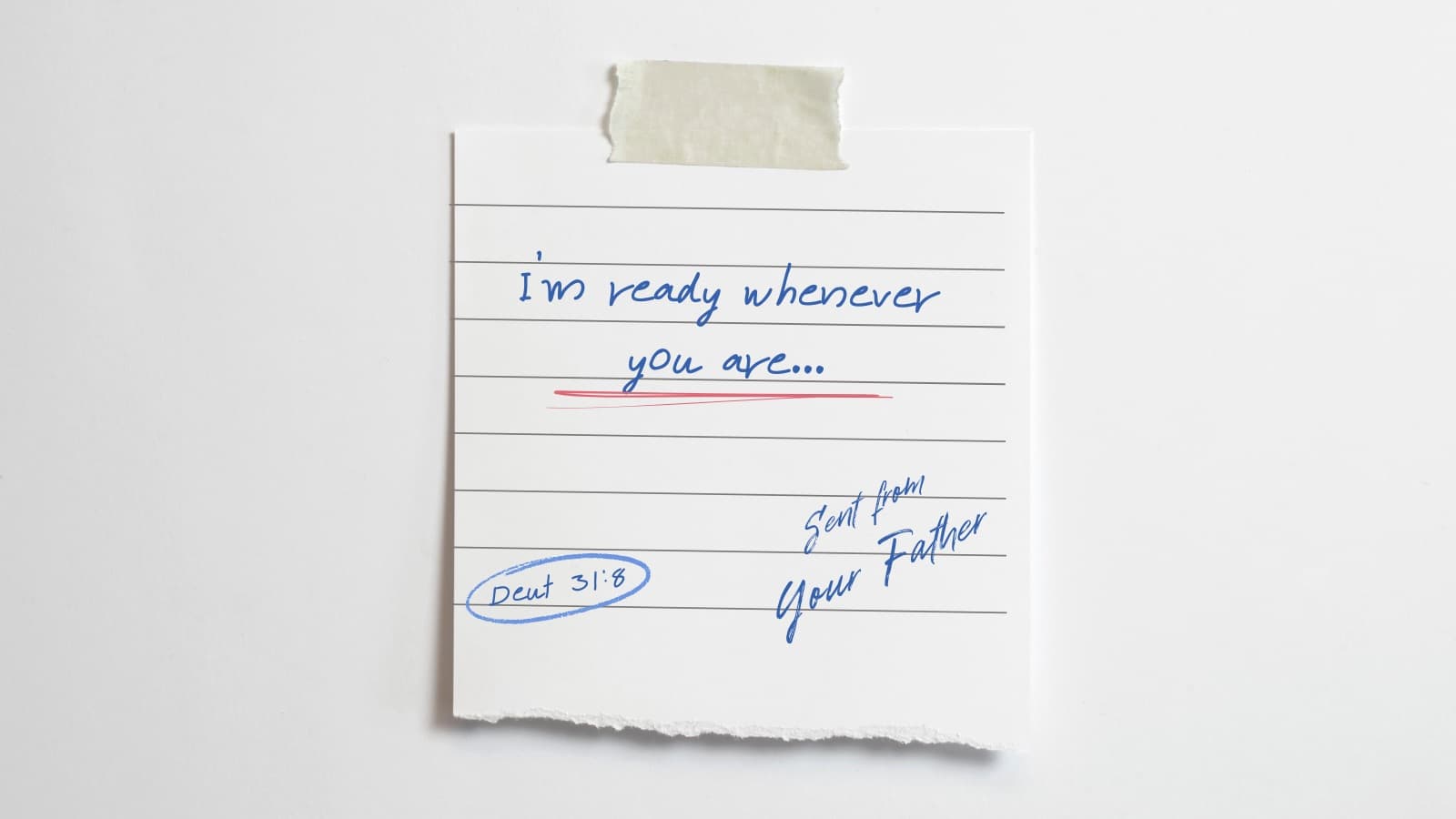
Sometimes we're waiting eagerly for God to show up and do something supernatural. And yet, nothing. No change, no movement, no sign. We know what the Bible says. We believe it. Nothing is too difficult for God Jeremiah 32:27 But my current situation? This one must be the exception. Because nothing is happening. Here's a thought that might surprise you: God might just be waiting on you. Wild, I know. I'm waiting on Him — why is He waiting on me? But look through Scripture and you'll find it's actually the pattern. Every time God comes through for a person or a nation, there's almost always a move they had to make first. Abraham didn't receive the promise sitting at home. He had to pack up and leave, not even knowing where he was going Hebrews 11:8 Naaman wanted his leprosy gone but had to humble himself and dip seven times in a river he had no respect for 2 Kings 5:14 Joshua and the Israelites stood at the edge of a flooded Jordan river. The promise of the land was real and already theirs — but God told the priests to carry the ark and set their feet in the water first. Then He would hold it back. Not before. After. Joshua 3:13 Same pattern, every time. So why the dance? If God is able, why does He wait for us to move? Because it was never really about the miracle. It was about them. It is about us. The instruction isn't a hurdle God puts in the way — it's the thing that builds the kind of faith you can actually live on. Abraham became the father of faith by walking it out one step at a time. The Israelites crossed into their promise on the same legs that had to trust first. And here's the thing — the action itself isn't what causes the miracle. Naaman's skin didn't heal because of the river. The Jordan didn't part because priests have special feet. God responded to their faith made visible through obedience. Without the instruction, they're just wet. It's not the step that opens the water. It's the God who told you to step. It's not the step that opens the water. It's the God who told you to step. So before you conclude that God is silent or that your situation is the exception — it's worth asking honestly: has He already told me to do something? Is there an instruction I've been sitting on, waiting for a sign before I obey it? The promise was never the problem. His willingness was never in question.
May 1, 2026
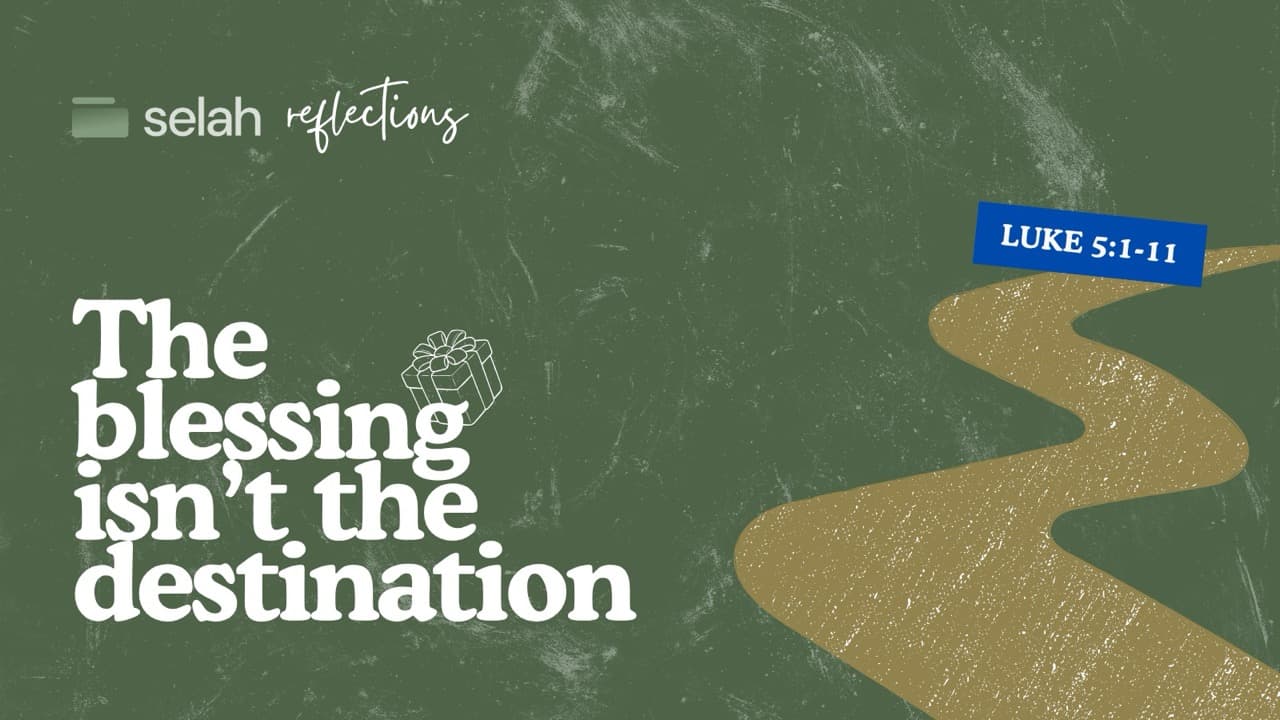
In Luke 5:1-11, Peter experiences the greatest moment of his professional life — a catch so overwhelming it changes everything. And yet, his response is unexpected. He walks away. At the feet of Jesus Christ, Peter realizes something: the miracle was never the destination. It was an invitation. How often do we treat God’s blessings as endpoints instead of doorways? That breakthrough, that promotion, that opportunity — it wasn’t given to pull you away from God, but to draw you deeper into His purpose. Years later, Peter would say "We have left everything to follow you" And Jesus responds with a promise: that no one who leaves things for His sake will go without, but will receive far more in return Matthew 19:27-29 Peter could have stayed, building a life around that moment, returning again and again for another miracle. But instead, Jesus revealed something greater — a calling that redefined his priorities. And Peter followed. Some blessings are not meant to be held onto, but to be surrendered.
April 15, 2026
Want to receive our monthly reflections in your inbox?
